Electrification: it’s time for fleets to share what they know
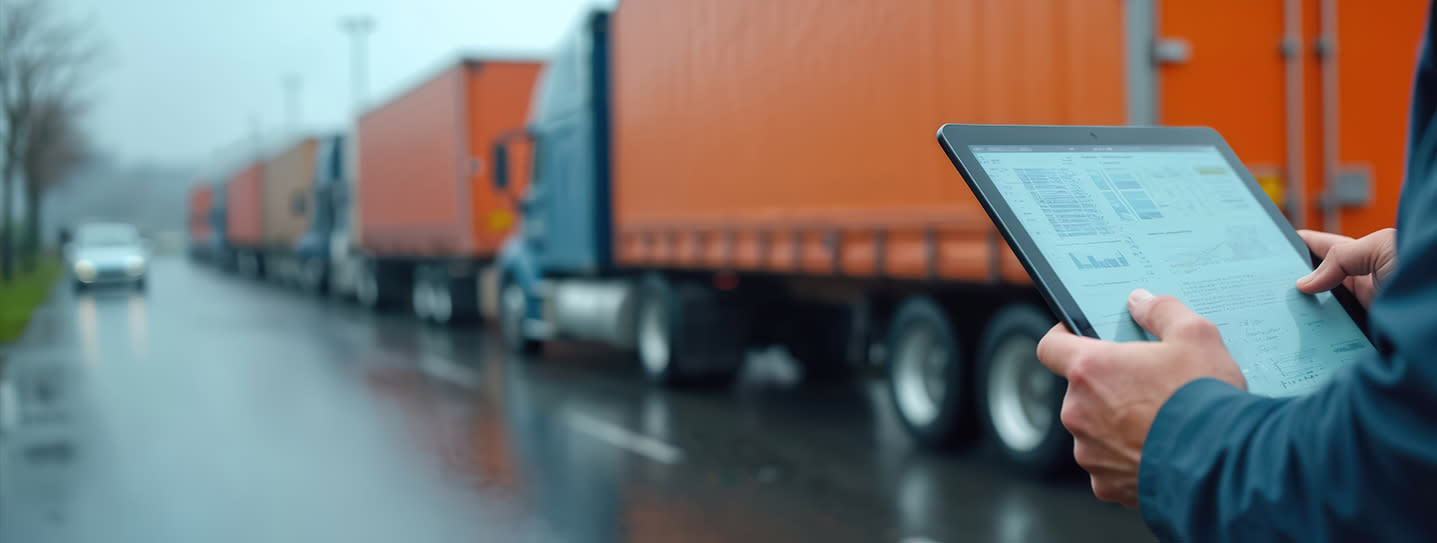


Paul Holland, Managing Director of UK/ANZ Vehicle Payments at Corpay, says, to decarbonise, the commercial vehicle sector needs a radical new approach in which fleets share their data with others, including competitors.
For any commercial fleet, and especially one looking to decarbonise through electrification, data about how vehicles are operating is fundamental. Without it, the transition relies too much on assumption. With it, fleet operators can make more accurate decisions about cost, performance and vehicle suitability.
If you have good data, then you have an advantage. But I would contend that if you have good data, there is also a case for sharing some of that insight with the rest of the industry.
That idea will not come naturally to many transport operators. Information that improves efficiency can also improve competitiveness, helping fleets win work, protect margins and operate more effectively. On that basis, sharing it can seem illogical. And in the case of established powertrains and proven technologies, I would agree.
I think, however, we are in a unique situation with electric (and I include hydrogen in this) that hasn’t happened before, and is probably unlikely to happen again.
The reality is that no single company can solve decarbonisation in isolation. Such is the complexity of the transition in many cases that we simply do not know what we do not know.
One of the key areas I believe could benefit from sharing is the lifeblood of a fleet: the fuel or energy that runs it. It provides near-instant data that gives an operator a clear view into the status of their vehicles.
While other elements of the total cost of ownership (TCO), such as servicing, maintenance, or residual values only reveal themselves over much longer time and distances, fuel and energy usage can be tracked on an almost daily basis, demonstrating the health of a fleet in terms of efficiency and economy.
As fleets may transition to electric, having this data to hand is invaluable, because it can help operators to understand what influences the running of these vehicles. For example, if there’s a change in the outside temperature, the data may show increased energy use and reduced range as batteries become less efficient. Or perhaps vehicles doing long motorway trips or carrying heavy loads are needing more charging, which results in higher costs.
The cost and volume of energy reported from charge card purchases matched to operational circumstances in real time is invaluable because it allows fleet managers to learn exceptionally quickly what works, what doesn’t, and what may need adapting.
The last thing you need is to put electric vehicles on particular jobs and find out months later that they haven’t been able to handle them as well as was expected, costing the business money and hitting productivity.
With the data from energy consumption and its procurement, you can avoid this happening because every day, every week, you can see what’s going in and what’s coming out and where there are anomalies or successes. It gives the business an advantage in that it can be proactive and tactically astute.
This is, of course, great for a business transitioning to electric and trying to learn about TCO, infrastructure, range, and suitability. Sharing this data with other operators, wherever possible, would be too.
While there are some wins to be had now, the big ones will come as electric trucks and HGVs begin operating in larger numbers. That process is already under way: government has increased support for electric lorries, including discounts of up to £120,000, and nearly 300 zero-emission HGVs were expected to be operating through the ZEHID programme by March 2026. In parallel, OZEV is progressing a proposed Zero Emission Truck Grant scheme for 2026 to 2027. When that momentum builds further, the cost per vehicle will fall and technology within them will advance, the desire for infrastructure will increase and the amount paid for the energy could reduce too.
At that point, every operator that wants to will be able to transition, and the economy as a whole will benefit from this most important of supply chains.
The only way to get there as quickly as possible is for fleets to share their information with others, to show what they do and how they operate, so piece by piece, these smaller, individual successes can help build a picture from which the whole industry can benefit. Artificial Intelligence (AI) will be vital in this because of its ability to consume vast amounts of material from many different streams and turn them into usable formats and actionable insights.
As every operator electrifies with confidence, so the industry can be more certain about the costs, demands and solutions required. A rising tide lifts all boats, the saying goes, and it applies here.
It can be done relatively easily because fuel/charge cards are a proven tool for managing fuel purchasing and consumption, and deliver a consistent, secure payment mechanism while generating a continuous stream of data. It shifts the conversation from theoretical cost models to operational realities, from isolated pilots to industry-wide collaboration.
Payment and data solutions will become enablers of both economic and environmental change, ensuring that the transition to cleaner transport is not only sustainable but also commercially robust.
Fuel cards, in other words, are not always just a payment solution: they are a data platform that underpins strategic decision-making and the potential transition to a decarbonised future for the industry. By pooling our resources together and working as one, we can now bring that future nearer.